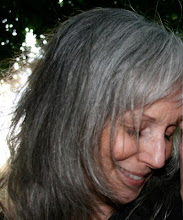
Art is sneaky. It turns you green. Having dropped off the cliff of the hearing world into the ocean of non-silence that is my deaf world, I am the Siamese cat who howls this song in the stairwell to her internal orchestra while the rest of the world keeps on marching. I need now, more than ever, the music of my hands, as I recycle myself. I need art to convey the burden of purpose. The purpose? Halt the march. Art is the way I green my attitude towards change, and point others towards repurposing how they live and what they do.
A writer for a local newspaper interviewed me this week, a really nice gesture that comes at a poignant time. She asked about the word "reUse", and a curious discussion of art, eco art, recycling, upcycling and greener living ensued. A curator, Elizabeth Lamb, first framed it in words that rang true for me: "There's an automatic association between reUse and the roughhewn, worn or used up which is a barrier to reUse art being taken seriously in the Art World." I think it is even bigger than that. The zeitgeist of the Atomic Era seeped into our national mindset like so much plastic, leaving a contemporary construct that remains actively unchallenged. Commercials bathe us in a mental potion of manipulative language and imagery about 'new, better, improved' that has, literally and figuratively, poisonous consequences. We buy at our own risk. An endless addictive cycle of annui, thrill then disenchantment attends the proliferating and hungering for the most current (aka better) consumer goods. What is it about humanity that we are such suckers for novelty?
All this failed me during the interview. Words are not easy for me. I reached for my basket of feline fur and needlefelting, to show the simple process of felting the material for jewelry projects such as this Mandalacat Amulet which is made of 15mm glass beads, reclaimed sterling cable (or guitar string), upcycled leather, a vintage button and, my wool of choice, persian cat fur.

What I should have said was that most American children probably think felt grows in 12" square blocks on a colored felt tree at a craft megastore. Instead, I learned about felt yurts and shelters in Central Asia where my mother's people came from before immigrating to Germany. For millenia, people have been shearing goats, sheep and other animals, boiling and matting this versatile fibre for everything from walls and doors to coats, hats and shoes. I'm not innovating at all. I use what is at hand, as people have always done. Think of the unique Chinese gardens, where broken pieces of pottery are worked into mosaic amidst local stones. Examples are everywhere. Quilling in the work of Lakota artists, caribou tufting by the Dinendeh. An early mentor, calligrapher Inga Dubay, who restored the art of beautiful writing to Oregon's school system through the Getty-Dubay method, put it best: "Use it up, wear it out, make it do or do without".
Back to the burden: I am stunned that greening life is considered a new idea. It is traditional. It is what people have done since time out of mind. Things which were made from the earth return to it and become grist for something else. Cities rise and fall and new cities are built atop the previous ones. In America, we forget this. This land was full of art and culture when Europeans came here and built over and against the active cultural traditions which were in progress. The neo-industrial world overshadows the agricultural proclaiming itself bigger and smarter. It's the same old story in new clothes. Since when is common sense an innovation?
Living greener is about returning. Trusting methods that were time-tested over generations. Being content to be temporary creatures of a time and a place, instead of having to be THE time and THE place in some grand sense. I feel the most important thing I can do, as an artist, is pass this tradition on to my loved ones and friends: take what is at hand, and let this become transformed by caring attention into a message of purpose and appreciation. To be greener, attend in a new way. To be an artist, listen inside and let your attention be drawn to a new mechansim of expression as your hands make music with the ordinary. Think, what else can this become? Or in life, what else can I make of what is at hand?